Cosmic Corridor Sprint stands out in the crowded endless runner genre thanks to its inventive rotating tunnel design. The way the path twists onto walls and ceilings forces you to constantly reorient yourself, adding a spatial awareness challenge most runners lack. The two obstacle types—breakable floors and laser beams—complement each other well, creating tense moments where you must choose between collecting an orb or playing it safe. The gradually increasing speed provides a natural difficulty curve without feeling unfair. The clean neon visuals and upbeat soundtrack create an inviting atmosphere. While the game doesn't offer deep progression systems or unlockable content, its core loop is solid and addictive. It's an excellent choice for quick gaming sessions.
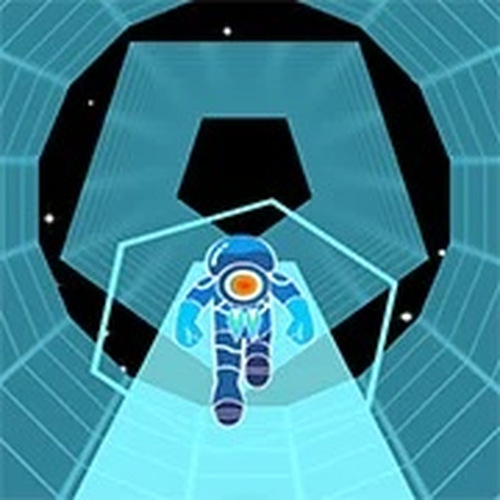
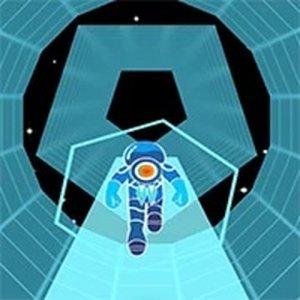
Cosmic Corridor Sprint places you inside a tubular track that constantly twists and reorients itself. As you progress, the path rotates, forcing you to shift your position onto walls and ceilings. The environment is a neon-lit space tunnel with a deep starfield visible beyond its transparent walls. The controls are straightforward: arrow keys on a keyboard or swipe gestures on a touchscreen let you move your character in any direction. The corridor's unpredictable rotation means you must stay alert and adjust your footing continuously.
Two primary hazards challenge your run. First, sections of the floor are made from brittle material that collapses the moment you step on them. These fragile panels appear in patterns that require quick sidesteps or jumps. Second, energy beams block certain segments of the tunnel. Touching a beam ends the run immediately. The beams appear in different configurations—some are stationary, others pulse on and off. Learning to read these patterns is key to extending your distance. The combination of rotating walls and these obstacles creates a constantly shifting puzzle that tests your spatial awareness.
Scattered along the corridor are small, luminous orbs. Collecting each orb adds points to your score. The orbs are placed in positions that sometimes require you to take a risk—darting toward one that sits near a fragile panel or a beam. The game tracks your best distance and highest score across sessions. There is no finish line; the run continues until you hit a beam or fall through a broken tile. Each attempt resets the distance, encouraging you to improve your personal record. The speed of the corridor increases gradually the farther you travel, demanding faster reactions and more precise movements.
The visual design uses bright, saturated colors against a dark space backdrop. The tunnel walls are semi-transparent, showing a star field and distant nebulae that create a sense of depth. The character is a simple geometric shape that leaves a faint light trail. The overall look is clean and modern, avoiding any violent or mature imagery. The color palette shifts subtly as you progress, with blues, purples, and greens dominating. The soundtrack features an upbeat electronic track that matches the pace of the run, with sound effects for orb collection and obstacle destruction.
The game is designed for quick play sessions. A single run can last from a few seconds to several minutes depending on your skill. There is no story mode or campaign; the focus is purely on improving your performance. The simple control scheme means anyone can start playing immediately without reading instructions. The increasing speed provides a natural difficulty curve that keeps the game engaging for both casual players and those seeking a challenge. The family-safe presentation makes it suitable for all age groups.





Player Comments
Sign in to comment
You must be logged in before posting a review or rating.
No account? Create one
No comments yet. Be the first to comment!